Saturday, 9 May 2020

Can a Dental Bridge Be Removed and Recemented?

A dental bridge is a fixed appliance that helps replace missing teeth. Typically, dental bridges can last for decades without ever needing attention. However, bridges can become loose or damaged, decay can get under the bridge and damage surrounding teeth, or changes in your teeth alignment can affect how the bridge fits in your mouth. When these things occur, bridge removal may be necessary. But can a dental bridge be removed and recemented into place? It all depends on the integrity of the bridge and the underlying problems. Here, Soundview Family Dental explains what a dental bridge is, and the complications that can lead to removal and replacement.
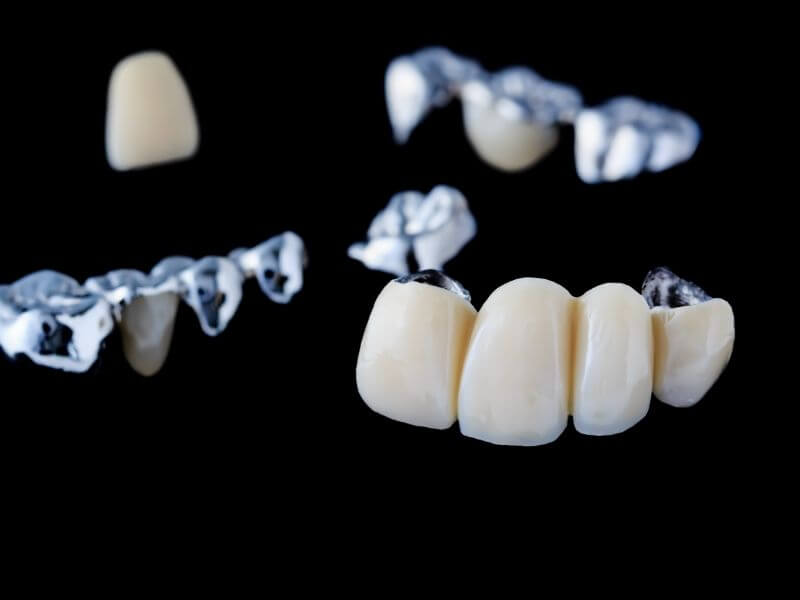
 

dental bridge


What is a Dental Bridge?

When you lose a tooth due to decay or other complications, the empty space affects the nearby teeth. With an open space, nearby teeth can tilt or drift out of place, affecting your bite and causing pain or tooth damage. A dental bridge is an appliance that replaces the empty space. A dental bridge consists of two or more crowns that fit on the top of the anchoring teeth or abutment. Between these crowns is a pontic, or false tooth, which will fill the gap of your missing tooth. The dentist cements the crowns into place over the healthy surrounding teeth. A dental bridge both restores the functionality of your teeth, and also provides significant cosmetic benefits by replacing a lost tooth and giving you back your smile.


Possible Risks and Complications Associated with Dental Bridges

As many as 120 million people in the United States are missing at least one tooth. This makes dental bridges a quite common and necessary dental appliance. While bridges are a highly successful dental treatment option, there is always a risk of possible complications that can require the removal or replacement of a bridge. These can include:

  • An improper or ill-fitting bridge – a poor or loose fit can lead to the build-up of tooth decay on the healthy teeth that are under the crowns. Because the dentist must file down the healthy teeth in order to place the crown, these teeth are more susceptible to decay. This decay to the anchoring teeth can lead to tooth damage and bridge instability.
  • Damage to neighboring teeth – Over time, dental bridges can develop rough areas. If these rough areas come in contact with other teeth, they can wear down natural tooth enamel on healthy teeth.
  • Increased risk of gum disease – Dental appliances, such as a dental bridge, can increase a person’s risk of gum disease. Regular brushing can help reduce this risk, as can regular dental cleanings. Regular dental visits allow your dentist to catch any potential signs of gum disease early and nip it in the bud before it causes any lasting damage.
  • Fractures to the pontic or crowns – While pontics and crowns are made to handle the force of chewing, they can still be fragile. Eating hard foods, such as hard candy, can crack or fracture the surface, create a chip, or completely damage the bridge. While small chips and cracks can often be repaired, larger breaks can require a new bridge.


Causes of Dental Bridge Failures

While dental bridges are designed to last for many years, many things can contribute to the failure of a dental bridge. When this happens, your dentist may need to remove, repair, or replace your dental bridge. Some common causes of bridge failure include:

  • Poor Oral Hygiene – The number one cause of bridge failure is poor oral hygiene. The build-up of decay around and under the crown can cause damage to the stabilizing teeth, resulting in bridge failure.
  • Poor Abutment Support – Changes to supporting teeth can reduce the stability of a dental bridge. Instability or reduced support from these teeth can result in uneven distribution of pressure on the bridge and can result in failure.
  • Bad Habits – Do you tend to chew on a pen when stressed? Do you suffer from nighttime teeth grinding? Are nuts and hard candies your favorite? Any of these habits can cause damage to the crowns or pontic of your bridge.
  • Lack of Regular Dental Care – While good oral hygiene at home is essential to maintain the life of your bridge, so are regular visits to your dentist. Regular oral exams can catch any potential problems with your bridge before they lead to bridge failure.
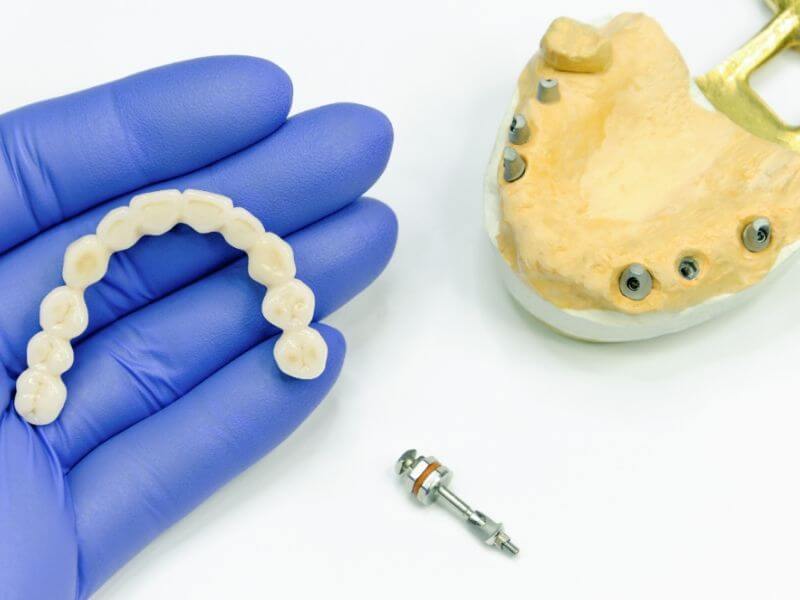
 

Can a dental bridge be removed and recemented


Can a Bridge Be Recemented After Removal?

How a dentist removes a damaged bridge depends on a variety of different factors. Loose bridges can often be easily removed and repaired, allowing your dentist to recement the bridge into place. However, the cement used to bond a bridge in place is designed to last for many years and it is not always possible to remove a bridge without causing damage to the support of surrounding teeth. Your dentist can try to tap off the bridge, but this can often injure and even fracture the support teeth. In these cases, the dentist will need to drill off the bridge and create a new one. What your dentist chooses to do will depend on the cause of the bridge failure, how strong the current bridge bond is, the integrity of the supporting teeth, and the desired result.


Consult Your Dentist for Recommendations and Treatments

As you can see, dental bridges provide both a structural and cosmetic solution for missing teeth. But they also require care and often change of habits. If you have missing teeth, or if you currently have a dental bridge that is causing you concern, contact Soundview Family Dental today to see how we can help. It may be possible to repair an existing bridge while in place or with careful removal, or it may be time for a new bridge.

Can a Dental Bridge Be Removed and Recemented? was first published on: https://www.soundviewfamilydental.com


Soundview Family Dental
201 5th Ave S Suite 103, Edmonds, WA 98020
(425) 563-6360
Our Edmonds Location


Sunday, 26 April 2020

What is Laser Dentistry?

While you may be familiar with laser treatments in the medical and cosmetic surgery fields, the use of laser treatments also occurs in the dental field. You may be familiar with laser whitening treatments, but when it comes to oral care, lasers offer many more options. Do traditional drills and sharp dental instruments give you nightmares and keep you from regular dental visits? Then laser dentistry may be just what you are looking for.

While not yet considered mainstream in many dental offices, the use of lasers to treat hard and soft tissue dental conditions is rapidly growing and an option at Soundview Family Dental. When used, the focused light beams target diseased or damaged tissue, and in most cases, this minimally invasive procedure offers patients many benefits over traditional dental treatment options.

laser beam

What is Laser Dentistry?

LASER stands for “light amplification by the stimulated emission of radiation.” The laser instruments used by dentists create a narrow and focused beam of light designed to react to specific tissue. Each laser instrument produces different wavelengths in order to target specific tissue. For example, soft tissue lasers target gum and soft tissue, such as the gums, while hard tissue lasers target hard tissue, such as teeth and bone.

When you come in for a laser dental treatment, you will find your appointment begins in a similar fashion to traditional dental treatments. You may receive anesthesia or a sedative, though at a much lower amount than required for traditional treatment. You will not experience the vibrations and discomfort you experience with traditional dental drills and, in most cases, you will experience little to no pain or discomfort. Laser treatments are often much quicker and more economical than traditional dental procedures and offer other additional benefits.

Benefits of Laser Dentistry

In addition to reduced or eliminated pain during dental procedures, laser dentistry offers a wide variety of benefits for patients. These can include:

  • No need for anesthesia with some procedures
  • Reduced risk of bacterial infections – the use of lasers sterilizes the area as it treats
  • Decreased need for sutures with some procedures
  • Minimal bleeding as the laser promotes blood clotting
  • Faster healing times
  • Less post-procedure pain and swelling
  • Less damage to the surrounding tissue – the focused light produced by lasers allow the dentist to focus on damaged tissue while leaving healthy tissue untouched
  • Reduced anxiety and increased comfort – for many people, the sound of a dental drill is enough to keep them from the dentist. Laser treatments are quiet and relatively pain-free, helping patients feel more comfortable and relaxed during treatment.
  • Reduced need for medications and antibiotics after treatment

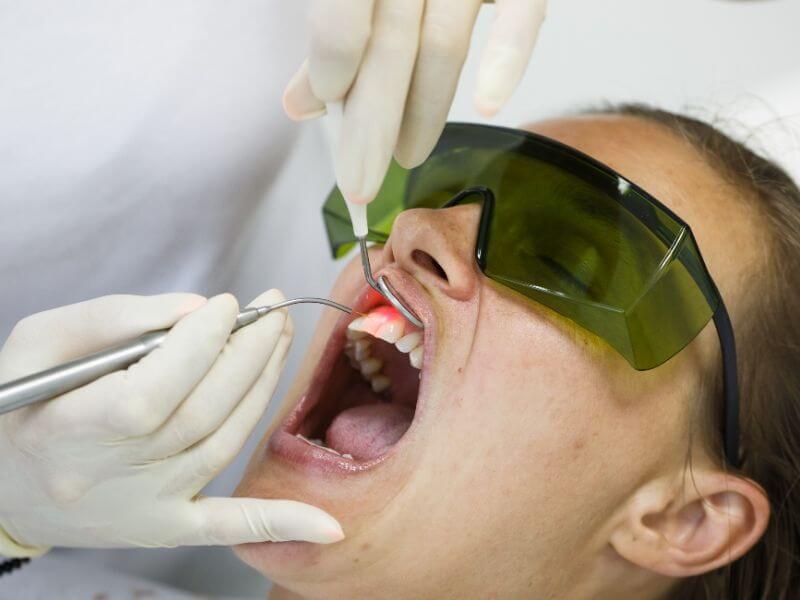
Dentist using a modern diode dental laser.

Procedures that Use Laser Dentistry Treatments

When it comes to laser dentistry, certain lasers focus on the treatment of the teeth while others focus on the treatment of gums and soft tissue. The differences between the lasers depend on their wavelength and the type of tissue they target. For example, the light wavelengths used by soft tissue lasers are easily absorbed by hemoglobin and water, making them ideal for gum and tissue treatment. In contrast, the wavelengths used with hard tissue lasers work with the calcium phosphate salt in your teeth and bones, making them ideal for specific procedures of the teeth. The specific dental work you require will determine the type of laser your dentist uses.

Hard Tissue Procedures

Hard tissue lasers use wavelengths that are absorbed through water and the calcium phosphate salt inside the tooth or bone. Dentists use these lasers to cut this hard tissue. Hard lasers reduce the need for anesthesia for procedures such as fillings. Common procedures that use hard lasers include:

  • Prepare and shape teeth prior to composite bonding
  • Repair worn-out or damaged fillings
  • Remove minor amounts of tooth structure
  • Treating teeth sensitivity – sensitivity to hot and cold is the result of the open tub

Soft Tissue Procedures

The wavelengths in soft tissue lasers are easily absorbed by hemoglobin (a molecule found in the blood) and water.  This makes them ideal for treating gum issues as they can cut into soft tissue while simultaneously sealing exposed blood vessels. This helps to reduce bleeding and reduce your healing time. In addition, laser treatments effectively kill bacteria in the mouth, reducing your risk of infection after treatment. Common procedures performed with soft lasers include:

  • Gum disease – the traditional treatment for mild to severe gum disease can include scaling and root planing to remove plaque and tartar as well as bone grafting or soft tissue grafting. Laser gum surgery eliminates these procedures as the laser can remove inflamed or dead tissue while killing bacteria.
  • Correcting uneven or disproportionate gum lines
  • Address restricted tongue movement
  • Lengthening crowns
  • Removing folds in oral soft tissue often caused by dentures

Additional Laser Dentistry Procedures

In addition to soft and hard laser treatment options, laser dentistry has other applications. Specific lasers can help you avoid dental x-rays and their associated risks by identifying tooth decay before it is visible to the naked eye. Your dentist can then treat the tooth decay with hard and soft tissue treatments. 

Laser whitening is another laser dental option commonly used to help brighten and improve your smile. After your dentist places whitening gel on your teeth, lasers help speed up the process and produce much whiter and brighter results.

Lasers have also made a big difference when it comes to crowns, veneers, and bridges. Laser CAD/CAM technology allows your dentist to produce more precise teeth impressions, making the procedures much more comfortable for patients.

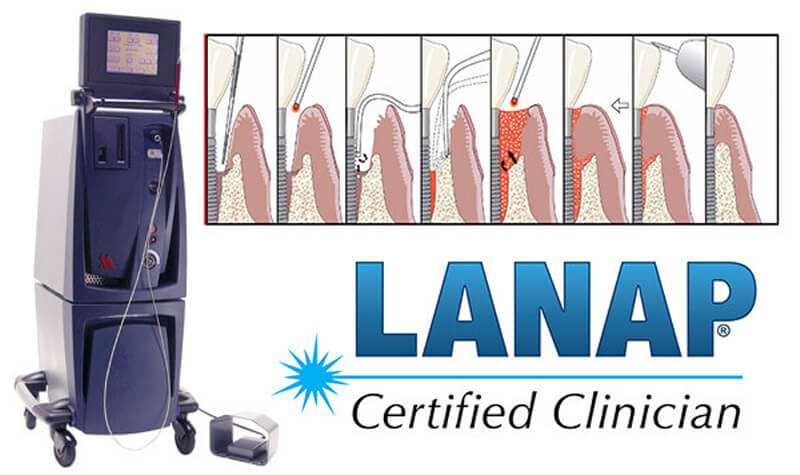
LANAP - Laser Treatment Technology

Laser Dentistry That You Will Find at Soundview Family Dental

At Soundview Family Dental, we utilize Electro Surge laser technology to provide quality deep cleanings and address periodontal disease. This laser technology also allows us to perform many soft tissue procedures with less pain, better results, and a much faster recovery, making this treatment option a patient’s favorite.

If you are interested in learning more about how laser dentistry can help you address your dental concerns, contact Soundview Family Dental today.


The article What is Laser Dentistry? is republished from: https://www.soundviewfamilydental.com/


Soundview Family Dental
201 5th Ave S Suite 103, Edmonds, WA 98020
(425) 563-6360
Our Edmonds Location
Saturday, 11 April 2020


Hi, I am Dr. Eric Kitts. Welcome to Soundview Family Dental! Located in beautiful downtown Edmonds. I grew up in the state of Washington and did my dental school at the University of Washington. 
When it came time to open a practice, I really wanted to open a practice in a beautiful community such as Edmonds. Every patient is different. Every patient deserves to have a customized treatment plan and individualized care. Patients leave our office feeling like it was all about them. One thing that I'd like people to understand is that the health of your teeth and gums affects your whole body. Poor oral health can have systemic consequences. It can affect your mood, your overall well being, and you're cardiovascular health. It's very important to take good care of your teeth and gums. And to visit your dentist regularly. 
We're able to provide the best care because we don't compromise what we do. We have a state-of-the-art facility with the best technology. And quite frankly, the best staff. When patients leave here I want them to feel like they were well cared for and that they want to come back. 
Dentistry is always exciting. It's always on the move. There are always new and bigger things coming out and I enjoy being apart of it. 
Come check us out! Let us care for your smile! 
Soundview Family Dental 
201 5th Ave S Suite 103
Edmonds, WA 98020
(425) 563-6360 

3 Best Electric Toothbrushes for Receding Gums

If you notice that your gums appear to be lifting away from your teeth, making your teeth look longer or even exposing some of the roots, chances are that you have receding gums. While many things can contribute to receding gums, if left untreated they can contribute to exposed root and tooth loss. If you have receding gums, your dentist may recommend an electric toothbrush to help treat the condition and reduce the risk of dental damage. Electric toothbrushes clean your teeth while minimizing the excess pressure some people place on their gums. Soundview Family Dental shares some top electric toothbrushes for receding gums to allow them to heal and return to their healthy position. 

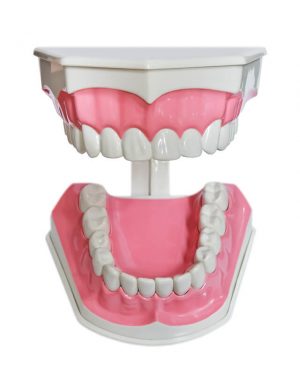
plastic teeth and gum model

What are Receding Gums?

Receding gums occur when the margin of gum tissue normally seen on the teeth pushes back, exposing more of the tooth. In extreme cases, the gums receded to the point that they can expose the root of a tooth. When receding occurs, it creates gaps between the gum and the tooth where bacteria can become trapped and build up. Bacteria can damage the tooth and the bone structure, often resulting in tooth loss. When this occurs, receding gum treatment, including scaling and root planing, is essential to avoid tooth deterioration.

Numerous factors can contribute to receding gums. A major contributing factor is poor dental hygiene that can also include brushing too hard. Increased pressure on the gums from hard brushing damages the gum tissue and contributes to receding. Other common causes can include:

  • Periodontal disease
  • Genetics
  • Hormonal changes
  • Tobacco use
  • Misaligned teeth
  • Teeth grinding or clenching


The Best Electric Toothbrushes for Receding Gums

Electric toothbrushes allow you to clean your teeth and gums without the added pressure many people apply when brushing manually. If you notice that the bristles on your manual toothbrush fray to the sides, chances are you are brushing too hard. Using an electric toothbrush with a soft-bristle brush head can reduce this pressure while still removing bacteria from your teeth. These are the top three electric toothbrushes for receding gums.


[embed]https://www.youtube.com/watch?v=bBHRyObWvaQ[/embed]

Philips Sonicare DiamondClean Smart Electric Toothbrush

As one of the top makers of electric toothbrushes, Philips Sonicare delivers a full oral care experience with its DiamondClean Smart line of toothbrushes. This line includes the base model 9300, the mid-model 9500, and their top model 9700. All three models take oral care seriously, offering different brush heads that address general cleaning, tooth whitening, deep cleaning, and gum health. The mid and top lines also include a brush head specifically for tongue care. 

For tech junkies, this is a smart toothbrush. Using Bluetooth technology, this toothbrush connects to an app to give you real-time feedback, including areas you may have missed while brushing. Sensors in the brush heads tell the toothbrush automatically adjusts the mode and intensity. For example, when you choose the gum-care brush, the toothbrush switches modes to provide the gentle care and pressure that your gums need. For general brushing, a sensor in the toothbrush detects when you are applying too much pressure and flashes a light. If you fall back to scrubbing like with a manual toothbrush, the sensor reminds you to stop and let the brush do the work. A location sensor connected to the app shows you areas of your mouth and teeth you missed during brushing, helping to make sure you treat your entire mouth.

Other benefits include:

  • Removes 10x more plaque
  • Improves gum health up to 7x in two weeks
  • White mode removes 100 percent more stains versus manual toothbrush
  • 4 or 5 different cleaning modes, depending on the model
  • 3 power intensity settings
  • Bluetooth connectivity
  • Pressure sensors in the brush heads
  • Brush head recognition
  • Built-in rechargeable battery with a cup charger
  • 2-minute timer to ensure optimal brushing time
  • A 30-second pacer to ensure you spend enough time in each section of the mouth
  • Automatic shut-off
  • Prices range from $199 for the 9300 to $329 for the 9700 model


[embed]https://www.youtube.com/watch?v=gLpUxDdh9iQ[/embed]

Oral-B Pro 5000 Rechargeable Electric Toothbrush

For those looking for a high-quality gum and oral care electric toothbrush at a more economical cost, the Oral-B Pro 5000 Rechargeable Electric Toothbrush offers many of the same features found in more expensive models. This toothbrush features five modes: Daily Clean, Gum Care, Sensitive, Whitening, and Deep Clean. It offers 3D cleansing action that oscillates, rotates, and pulsates in order to break up plaque on the teeth and along the gumlines. 

This toothbrush also uses Bluetooth technology to connect to a smartphone. The app provides real-time feedback on your brushing habits and helps promote better oral care. In addition to these benefits, the Oral-B Pro 5000 also offers:

  • 100% more plaque removal along the gumline than a manual toothbrush
  • 3D cleansing action
  • Pressure sensors that let you know when you are applying too much pressure
  • In-handle timer pulses that notify you every 30 seconds, so you know when it is time to change areas in the mouth
  • One brush head compatible with every mode
  • 2-minute time that lets you know when brushing is complete
  • Average price for this model is $99


[embed]https://www.youtube.com/watch?v=sLLxBTgi4sc[/embed]

Oral-B Pro 500 Rechargeable Electric Toothbrush

Quality oral care doesn’t have to come with a hefty price tag and the Oral-B Pro 500 Rechargeable Electric Toothbrush is evidence of that. For under $30, this toothbrush provides superior plaque removal when compared to a manual toothbrush, while still being gentle on the gums and helping to reduce the risk of receding gums. Benefits of this quality brush include:

  • 2D cleaning that includes oscillating and rotation in order to break up and remove plaque
  • 2-minute pro timer that signals every 30 seconds, reminding you to change location
  • Compatible with a variety of different Oral-B brush heads, including Sensitive Gum Care brush heads
  • Average price under $30


Electric Toothbrushes Better for Gentle Gum Care and Overall Oral Health

Each of these electric toothbrushes provides a variety of benefits when it comes to overall oral care, as well as addressing receding gums. In fact, a 2013 study showed that electric toothbrushes offer better removal of plaque and promote better oral health. The fact that electric brushes help reduce brushing pressure is another benefit when it comes to addressing gum recession. 

For more information about receding gums, treatment options, or to learn more about the benefits of electric toothbrushes, contact Soundview Family Dental today.

The post 3 Best Electric Toothbrushes for Receding Gums was first seen on: https://www.soundviewfamilydental.com


Soundview Family Dental
201 5th Ave S Suite 103, Edmonds, WA 98020
(425) 563-6360
Our Edmonds Location
Sunday, 29 March 2020

Pain from Gums: Causes and Treatments

[et_pb_section fb_built="1" admin_label="section" _builder_version="3.29.3" min_height="3251px"][et_pb_row admin_label="row" _builder_version="3.25" background_size="initial" background_position="top_left" background_repeat="repeat"][et_pb_column type="4_4" _builder_version="3.25" custom_padding="|||" custom_padding__hover="|||"][et_pb_text _builder_version="4.4.1"]

While everyone talks about tooth pain, you are just as likely to experience pain from gums at some point in your life. Whether you are experiencing constant pain or pain when you eat and drink or brush and floss your teeth, the root of gum pain can have many causes. Knowing what factors or conditions may contribute to your gum pain can affect your treatment options. Here we will explore the various causes of gum pain and what treatment options are available.

[/et_pb_text][et_pb_image src="https://soundviewfamilydental.com/wp-content/uploads/2020/03/pain-from-gums.jpg" _builder_version="4.4.1"][/et_pb_image][/et_pb_column][/et_pb_row][et_pb_row _builder_version="3.29.3"][et_pb_column type="4_4" _builder_version="3.29.3"][et_pb_text _builder_version="4.4.1"]

What Causes Pain From Gums?

While many assume gum pain and irritation is due to poor oral hygiene, that is only one possible cause. In many cases, the cause is out of your control. For example, changes in your hormones can contribute to gum pain. While proper oral hygiene helps to keep your mouth and gums healthy, you can’t always prevent or predict what is causing your gum pain and irritation. Some common causes of painful gums can include:

[/et_pb_text][et_pb_text _builder_version="4.4.1"]

  • Gum Disease (Gingivitis and Periodontitis) Gingivitis is the early and mild form of gum disease. Painful gums are often the first sign that something is wrong. Plaque is the sticky substance that forms on your teeth. It is a combination of starches, sugars, and normal mouth bacteria. Tooth brushing and flossing is designed to remove plaque. Unfortunately, if not removed, plaque turns into tartar. This hardened plaque collects bacteria and causes irritation at the gumline. The longer this tartar remains on the teeth, the greater the risk of bacteria entering the gums and the teeth. If left untreated, the ongoing inflammation leads to periodontitis. This is a serious condition that can lead to the loss of teeth, tissue and even bone.
  • Canker Sores – Painful ulcers, known as canker sores, can develop on the gums as a result of stress or injury. They can also be a symptom of an underlying condition, such as autoimmune conditions, nutritional deficiencies, and gastrointestinal diseases.
  • Sinus Infections – In some cases, gum pain has nothing to do with your gums at all. Sinusitis, or a sinus infection, causes inflammation and swelling in the sinus cavity. Unfortunately, swelling and irritation puts pressure into the jaw and can lead to pain in the gums and teeth. If you are not experiencing red, swollen, or bleeding gums and have a history of sinus issues, your nose may be the cause.
  • Abrasions and Cuts – Sometimes gum pain occurs due to simple cuts and abrasions in the gum. This can happen from something as simple as a popcorn kernel to more regular injuries and irritations from braces or other dental hardware.
  • Underlying Medical Conditions, Medical Treatments, or Lifestyle Choices – Various medical conditions, such as autoimmune diseases like Sjogren’s or oral cancer, can affect the mouth and lead to gum irritation. Certain medications and treatments, such as calcium channel blockers or chemotherapy, can also contribute to gum irritation. Smoking, chewing tobacco and a poor diet are also contributing factors.

[/et_pb_text][et_pb_image src="https://soundviewfamilydental.com/wp-content/uploads/2020/03/gum-pain-prevention.jpg" _builder_version="4.4.1"][/et_pb_image][et_pb_text _builder_version="4.4.1"]

Relief and Treatment for Gum Pain

How you treat your gum pain depends on the underlying causes. The best place to start is good oral hygiene. This means brushing your teeth at least twice a day and flossing at least once a day. It is important to focus on the area around the gumline. In some cases, an electric toothbrush can provide better cleaning and increased gum stimulation. Anti-gingivitis mouthwashes can also help to kill bacteria that remain after brushing and flossing.

But good oral care doesn’t end with brushing and flossing. You should also go in for regular dental visits, including cleanings, every six to 12 months. This allows your dentist to catch any potential problems before they contribute to gum pain. 

Other treatment options focus on the cause of gum pain and addressing the underlying causes. These can include:

[/et_pb_text][et_pb_text _builder_version="4.4.1"]

  • Canker Sore Treatment and Prevention – If canker sores are causing painful gums, talk to your doctor about regular treatment options. If you are susceptible to canker sores, avoid abrasive, acidic or spicy foods that can contribute to their development.
  • Sinusitis Treatment – For regular sinus inflammation, talk with your doctor about the use of nasal sprays, antihistamines, nasal steroids, or nasal saline rinses. If you develop a bacterial infection, antibiotics may be necessary. Treating sinus pressure is often enough to reduce or eliminate your gum pain.
  • Adjustments to Dental Work – If you are experiencing cuts and abrasions to your gums from dental work or braces, speak with your dentist or orthodontist about possible adjustments. They can examine your dental appliances or braces and correct any abrasive areas or offer other options to reduce the risk of gum irritation and pain.
  • Treatments for Underlying Conditions – For gum pain caused by certain medical conditions, treatment focuses on treating the condition. Let your doctor know you are experiencing gum pain and ask how it may be treated. If gum pain develops after you start a new medication, let your doctor know and he may be able to offer alternative medications.
  • Changes to Lifestyle Choices – Eating healthy with a diet that includes vitamin C and calcium can help to minimize the risk of gum problems. Brush and floss your teeth daily and visit your dentist on a regular basis. Stop smoking or chewing tobacco. Engage in lifestyle changes, such as yoga, to help reduce your stress, which can also contribute to gum pain.

[/et_pb_text][et_pb_text _builder_version="4.4.1"]

Tips to Help You Find Gum Pain Relief at Home

As you treat the underlying causes of gum pain, there are some tips that can help you find temporary pain relief. Brush your teeth with a soft-bristle toothbrush and avoid strong alcohol-based mouthwashes. Drink plenty of water to keep you hydrated and help to rinse bacteria away from the gums. A warm saltwater solution can also provide some relief while also helping to remove bacterial buildup. A warm compress can also be applied to your face to help lessen your gum pain until the irritation and swelling heal.

[/et_pb_text][et_pb_text _builder_version="4.4.1"]

When to Visit a Dentist?

If you have addressed any potential underlying conditions and are still experiencing gum pain, contact Soundview Family Dental to make an appointment for a full exam. Dr. Kitts can check for possible signs of gingivitis or other possible dental concerns contributing to your pain.

[/et_pb_text][/et_pb_column][/et_pb_row][/et_pb_section]

The article Pain from Gums: Causes and Treatments was first published on: Soundview Family Dental


Soundview Family Dental
201 5th Ave S Suite 103, Edmonds, WA 98020
(425) 563-6360
Our Edmonds Location
Tuesday, 17 March 2020

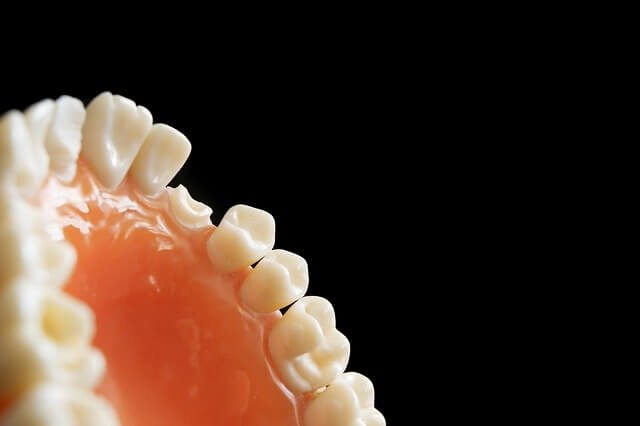
Wisdom Teeth Pain Symptoms: What Do They Mean?

[et_pb_section fb_built="1" admin_label="section" _builder_version="3.29.3" min_height="3251px"][et_pb_row admin_label="row" _builder_version="3.25" background_size="initial" background_position="top_left" background_repeat="repeat"][et_pb_column type="4_4" _builder_version="3.25" custom_padding="|||" custom_padding__hover="|||"][et_pb_text _builder_version="4.4.1"]

There is an old saying that says, “With age comes wisdom.” While this often refers to knowledge, it is also true when we talk about your teeth. Unlike the 28 other teeth in your mouth, wisdom teeth are a little different and they develop with age. But what does that difference mean and what really are wisdom teeth? Why do you often hear about wisdom teeth pain symptoms and what causes it? How do you know if the pain you experience is from your wisdom teeth?

Here we will take a closer look at wisdom teeth and what pain symptoms really mean.

[/et_pb_text][et_pb_image src="https://soundviewfamilydental.com/wp-content/uploads/2020/03/wisdom-teeth.jpg" _builder_version="4.4.1"][/et_pb_image][/et_pb_column][/et_pb_row][et_pb_row _builder_version="3.29.3"][et_pb_column type="4_4" _builder_version="3.29.3"][et_pb_text _builder_version="4.4.1"]

What Are Wisdom Teeth?

All your teeth develop before you are even born, with the exception of your wisdom teeth. During fetal development, tooth buds form for both your primary (baby) teeth as well as your permanent teeth. They do not erupt, or break through the gums, until after birth. However, wisdom teeth do not begin to develop until around age seven and do not erupt until your late teens or early twenties.

Known as the third molars, wisdom teeth erupt at the back of the jaw, behind your second molars. Unfortunately, in many cases, there is not enough room in the jaw for wisdom teeth to come through without complications. So why does your body even make these unnecessary teeth? The answer is unknown, but researchers speculate it has to do with the primitive human diet. 

A prehistoric human diet was much more abrasive on teeth, often causing damage to the first or second molars. Researchers believe that wisdom teeth provided late replacement teeth when molars wore out. There is also evidence that prehistoric humans had larger jaws provided more room for these additional teeth.

With softer diets and smaller jaws, wisdom teeth are no longer essential and, in many cases, can contribute to pain, infections, and gum disease when they erupt.

[/et_pb_text][/et_pb_column][/et_pb_row][et_pb_row _builder_version="3.29.3"][et_pb_column type="4_4" _builder_version="3.29.3"][et_pb_text _builder_version="4.4.1"]

What Causes Wisdom Teeth Pain?

When you understand that modern jaws do not have room for additional teeth, it is easier to understand why wisdom teeth eruption can contribute to pain and complications. There simply isn’t enough room and additional teeth trying to push through can lead to:

  • Wisdom teeth coming in crooked due to a lack of space and pressure from neighboring teeth.
  • Inability to erupt through the gums, known as impacted wisdom teeth. Wisdom teeth become trapped underneath the gums and can lead to severe pain and infection. 
  • Bacterial infections. If your wisdom teeth partially erupt, bacteria can easily enter the opening and lead to a serious infection that can spread throughout the body.
  • Additional pressure on the nerves and bones of the jaw.

While most associated with general pain, wisdom teeth can contribute to other painful complications. Symptoms from wisdom teeth can develop gradually or come on suddenly. These symptoms can include:

  • Pain – One of the most common symptoms associated with wisdom teeth is pain. Pain can occur from pressure against other teeth as the wisdom tooth tries to erupt. Pain is also common with infection. You feel wisdom tooth pain at the site of the wisdom tooth and in the jaw. You may experience continual pain or only have pain when you open your mouth or chew. 
  • Swelling and Inflammation – Wisdom teeth coming in can contribute to swelling and irritation of the gums and surrounding tissue. You may experience tender and bleeding gums. If infection occurs, you may experience pus and fever. You may notice that the lymph glands under your jaw are swollen or sore.
  • Stiff and Sore Jaw – As your wisdom teeth erupt, or try to erupt, they push against your other teeth and cause swelling of the gums. When this occurs, the added pressure can cause stiffness and pain in the jaw, making it difficult to open your mouth, chew, and talk.
  • Gum Disease and Cavities – Because most people do not have enough room for wisdom teeth, an eruption can cause overcrowding and make brushing your teeth difficult. This can contribute to tooth decay, cavities, and gum disease.
  • Cysts and Tumors – If left untreated, cysts and benign tumors can occur. While the tumors themselves are harmless, they can contribute to an infection and the destruction of the jawbone.
  • Sinus Pressure and Pain – If you suffer from regular sinus pain, sinus pressure or sinus headaches, your wisdom teeth may be the culprit. The roots of growing wisdom teeth can push against the sinus cavity, resulting in sinus complications.

[/et_pb_text][et_pb_image src="https://soundviewfamilydental.com/wp-content/uploads/2020/03/wisdom-teeth-pain.jpg" _builder_version="4.4.1"][/et_pb_image][/et_pb_column][/et_pb_row][et_pb_row _builder_version="3.29.3"][et_pb_column type="4_4" _builder_version="3.29.3"][et_pb_text _builder_version="4.4.1"]

When to Have Wisdom Teeth Removed?

Deciding if or when to have wisdom teeth removed depends on many factors and is something you should discuss with your dentist. While some people experience no problems with their wisdom teeth, that is not usually the case. Dentists typically begin monitoring wisdom teeth development around the age of 16. While you may not experience any symptoms at this point, your dentist or oral surgeon may recommend removal before an eruption. Many dentists and oral surgeons believe removal before the age of 20 makes the procedure easier as the roots and bones have not fully developed. In addition, younger patients tend to recover from the procedure faster and with fewer complications.

If oral surgery and wisdom tooth removal do not occur when you are in your teens, regular dental visits allow for regular monitoring before symptoms occur. However, if you experience any of the common symptoms, your dentist will likely recommend removal immediately. 

[/et_pb_text][et_pb_text _builder_version="4.4.1"]

What Should You Do About Your Wisdom Teeth?

While our ancient ancestors likely needed wisdom teeth, they are not necessary today. In many cases, if left untreated, wisdom teeth can cause pain and dental complications. If you are in your late teens or early twenties, visit your dentist to discuss your wisdom teeth and possible removal before symptoms or complications occur.

If you are already experiencing wisdom teeth symptoms, schedule an appointment with Soundview Family Dental today and we can discuss wisdom tooth removal and help keep your smile at its best.

[/et_pb_text][/et_pb_column][/et_pb_row][/et_pb_section]

The following post Wisdom Teeth Pain Symptoms: What Do They Mean? was first seen on: www.soundviewfamilydental.com


Soundview Family Dental
201 5th Ave S Suite 103, Edmonds, WA 98020
(425) 563-6360
Our Edmonds Location
Sunday, 8 March 2020

Smoking After Removing Wisdom Teeth


[et_pb_section fb_built="1" admin_label="section" _builder_version="3.29.3" min_height="3251px"][et_pb_row admin_label="row" _builder_version="3.25" background_size="initial" background_position="top_left" background_repeat="repeat"][et_pb_column type="4_4" _builder_version="3.25" custom_padding="|||" custom_padding__hover="|||"][et_pb_image src="https://soundviewfamilydental.com/wp-content/uploads/2020/03/girl-smoking.jpg" _builder_version="4.3.4" hover_enabled="0"][/et_pb_image][et_pb_text _builder_version="4.3.4" hover_enabled="0"]

Are your wisdom teeth starting to bother you? Is it time to get them removed? While wisdom teeth extraction is a relatively straightforward procedure, the recovery can be complicated for those who smoke. Yes, it can be tempting to have a cigarette following the removal of your wisdom teeth. But you should know that doing so can put you at risk for a painful condition called dry socket. 

In this article, we’ll explore wisdom tooth surgery, what you can expect, and why it’s necessary. We’ll also go over everything a smoker needs to know before having the surgery. While most everyone knows that smoking isn’t good for your health, that doesn’t mean it’s easy to quit. If you’re a smoker and need to have your wisdom teeth removed, this might be an excellent time to kick the smoking habit for good. But if you can’t bear to quit, you should still consider having your wisdom teeth removed.

[/et_pb_text][/et_pb_column][/et_pb_row][et_pb_row _builder_version="3.29.3"][et_pb_column type="4_4" _builder_version="3.29.3"][et_pb_text _builder_version="4.3.4" hover_enabled="0"]

Wisdom Teeth Extraction Procedure

Having a wisdom tooth extracted is a bit different than having a tooth pulled. Wisdom teeth are located in the back of the mouth, where the tooth is far more difficult to access. Removing a wisdom tooth is more like a surgery than a regular extraction. Your dentist will make an incision in the gum line, then he or she will gently pull the tooth out, suturing the wound after.

[/et_pb_text][et_pb_image src="https://soundviewfamilydental.com/wp-content/uploads/2020/03/wisdom-tooth.png" _builder_version="4.3.4" hover_enabled="0"][/et_pb_image][/et_pb_column][/et_pb_row][et_pb_row _builder_version="3.29.3"][et_pb_column type="4_4" _builder_version="3.29.3"][et_pb_text _builder_version="4.3.4" hover_enabled="0"]

Reasons For a Wisdom Tooth Extraction

Wisdom teeth were once needed to help us chew tougher foods. Throughout evolution, this has become less necessary, and thus our mouths have adapted, and the space for wisdom teeth to come in has become smaller - often too small to accommodate the teeth.

For patients with a smaller space, crowding can become an issue.  Crowding can be very painful and can create unsightly and uncomfortable alignment problems. Most dentists recommend a patient have their wisdom teeth removed if they are causing pain, or if there isn’t enough room for them to come in. 

[/et_pb_text][/et_pb_column][/et_pb_row][et_pb_row _builder_version="3.29.3"][et_pb_column type="4_4" _builder_version="3.29.3"][et_pb_text _builder_version="4.3.4" hover_enabled="0"]

Smoking After Removing Wisdom Teeth

Okay, so you have decided to move forward with your wisdom tooth removal. But you are a little leery about the idea of quitting smoking. Smoking following any oral surgery increases the chances of certain complications. We advise that quitting before the procedure is the best thing a patient can do, not just for their oral health and the procedure, but for their overall health too.

[/et_pb_text][et_pb_text _builder_version="4.3.4" hover_enabled="0"]

What Happens If You Smoke?

After wisdom tooth surgery, if you take a puff the first thing you’re likely to notice is extreme discomfort. We recommend patients avoid straws for the same reason: the last thing you want to do after wisdom tooth surgery is create suction in your mouth. The suction will pull on the wound, creating a fair amount of pain and pulling the sutures apart.  In addition to causing pain, smoking will delay healing.

[/et_pb_text][et_pb_text _builder_version="4.3.4" hover_enabled="0"]

What are the Risks?

The biggest risk of smoking following a wisdom tooth extraction is a condition called dry socket. If you’ve ever discussed wisdom tooth extraction with a smoker who has had the procedure, they might know a thing or two about this condition. In standard settings, after a tooth is extracted, a blood clot will form in the socket. This is a good thing and is part of the normal healing process. Dry socket is when the blood clot fails to develop, or it becomes dislodged before healing. When this happens, all the nerves under the tooth become exposed, which creates a very painful situation. 

If you smoke, the suction could draw the blood clot out, or prevent it from forming. While non-smokers can develop this condition too, dry socket is much more prevalent in smokers.

[/et_pb_text][et_pb_video src="https://www.youtube.com/watch?v=FEago6gbVHY" _builder_version="4.3.4" hover_enabled="0"][/et_pb_video][et_pb_text _builder_version="4.3.4" hover_enabled="0"]

How Long Before You Can Smoke Again?

Though we highly recommend that patients don’t smoke, we know that for most smokers, quitting is very difficult. If you must smoke after having your wisdom teeth removed, we highly advise you to wait for at least 72-hours. This will allow the socket to heal somewhat and diminish your chances of complications. We’ve found that many patients don’t want to smoke immediately following the procedure anyway, as taking a draw from the cigarette can be painful. 

[/et_pb_text][/et_pb_column][/et_pb_row][et_pb_row _builder_version="3.29.3"][et_pb_column type="4_4" _builder_version="3.29.3"][et_pb_text _builder_version="4.3.4" hover_enabled="0"]

Conclusion

Having your wisdom teeth out is a very common surgery, but it isn’t an experience that anyone would call fun. Compounding that with not being able to enjoy a habit that you may have had for a long time, that can make an extraction something you may be inclined to put off. But if you are having discomfort with your wisdom teeth, it’s really something you should address sooner rather than later. The chances of infection, damage to your other teeth, not to mention the alignment issues that can happen over time, are important problems to avoid - even if you are a smoker.  

Soundview Family Dental can guide you through your wisdom tooth surgery, answer all of your questions, and make sure you feel safe and comfortable. Are your wisdom teeth bothering you? Come see us, we’re here to help.

[/et_pb_text][/et_pb_column][/et_pb_row][/et_pb_section]

Smoking After Removing Wisdom Teeth was first published to: https://www.soundviewfamilydental.com


Soundview Family Dental
201 5th Ave S Suite 103, Edmonds, WA 98020
(425) 563-6360
Our Edmonds Location

Understanding the Stages of Tooth Decay

Everyone has heard of tooth decay, but did you know that it occurs in five distinct stages? Each stage causes increasing damage to the tooth...